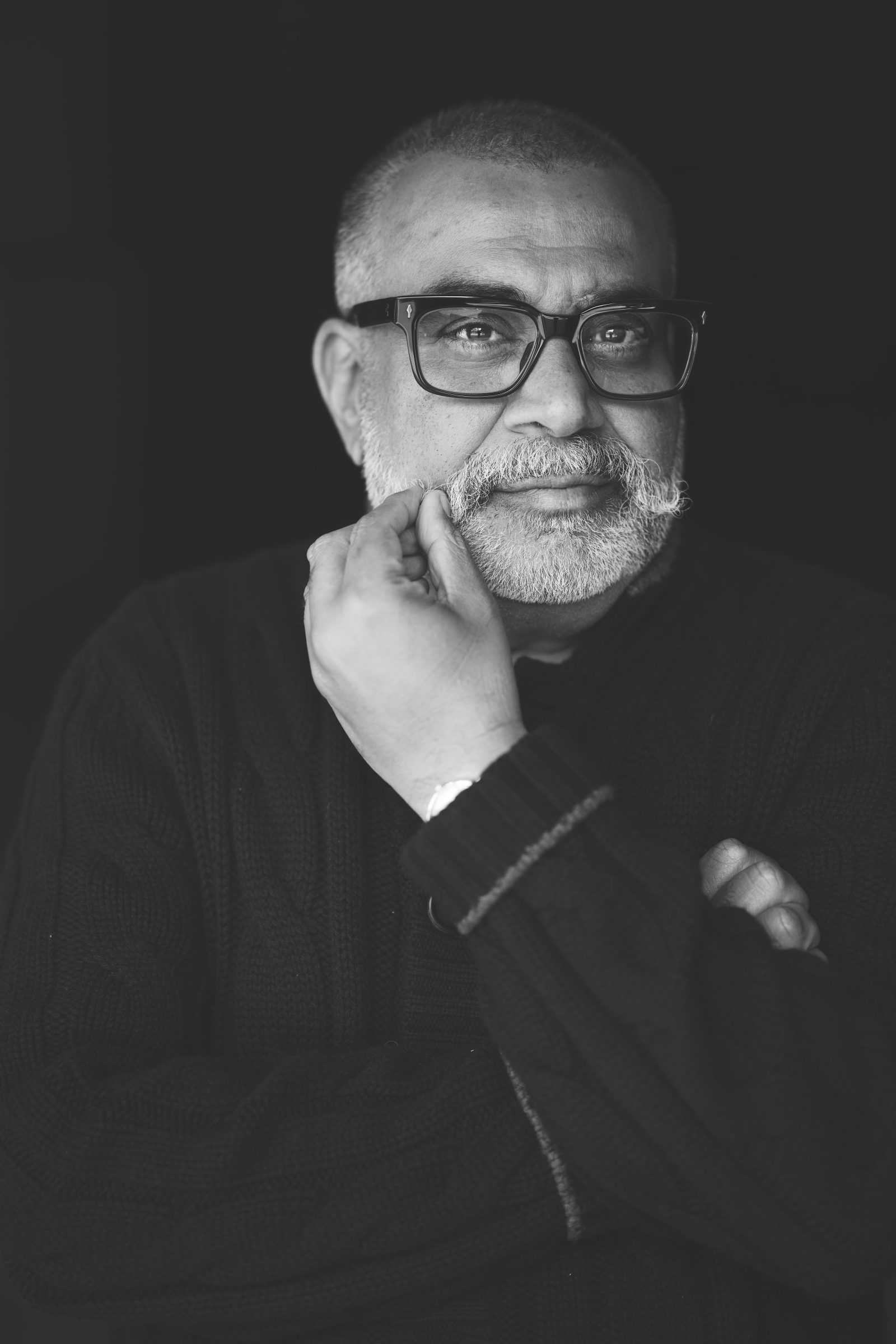
GigaOm was one of the first blogs I followed regularly, and then I continued to enjoy his writing on his personal blog, Om.co. His writing made you think differently about tech, about the internet, about what any of it actually meant. In fact, he’s one of the reasons I got into blogging, back in 2007-08.
In 2009, I had the chance to meet him at the first WordCamp India alongside Matt Mullenweg. Brief encounter, but those things stay with you.
Rest well, Om. Your words shaped more careers than you probably knew.
Today, I complete ten years at Zoho. I still remember we had about 15 products, 6 million users, and about 1200 colleagues back then. Today, we’re at 55+ products, 80 million+ users, and 11000+ colleagues globally. It’s nothing short of a fascinating journey!
ThenNow
But if you ask many of my colleagues, it’s not a big deal. There are more than a thousand employees at Zoho who’ve been here for a decade or more. Most of the leadership has been around for 10-15-20+ years. (My team recently launched a project—Humans of Zoho—featuring some of our long-term employees. Check it out!)
For me, though, it’s been a fulfilling journey, and it wouldn’t have been possible without all the love and support I got through the years. Thank you—one and all—who’s been on my side.
Friends and acquaintances outside of Zoho often ask me,
How did you manage to stay at a company for so long, even though you’ve always been away from the mothership (Chennai)?
I thought I’d use this opportunity (and this Saturday afternoon) to put down some of my thoughts on this.
Honestly, this wasn’t planned. It just happened! I don’t even think one can design it looking forward. Between 2008 and 2012, I along with 2 friends of mine ran a small business (an agency) for about four years. We decided to move on and I was looking for an opportunity in product / marketing.
I found one at Zoho (via my now wife), met the people, and decided to take up the role to see where it goes. That’s it. Time just flew. There’s no other secret to it.
Or maybe, there is! If you ask me, there are a bunch of things that I feel have kept me around. I’ll try to list down some of them.
The philosophy. This is the most important one. I found the company’s ethos & culture aligned with mine. A long-term approach to everything we do, focus on building the know-how instead of taking shortcuts, prioritizing people over profits and values over valuations, and long-term vision are some of the attributes that matter to me and have played a massive role in shaping who I am today. Here’s more on this.
The people. Starting with my first manager to the folks on my team today, I’ve enjoyed waking up on Monday mornings and working with them. Even though I was an outsider (a Hindi-speaking guy from U.P. / Delhi working with colleagues who speak a lot of Tamil), I never felt out of place after the initial few visits to the mothership. I’ve found most of my colleagues to be quite humble and carry a can-do attitude. It’s a great combination. I’m glad that in all these years, some of it got rubbed on me—I call it ‘cultural osmosis’. I’m also privileged to have a fantastic team that keeps pushing the envelope.
Trust-as-default, autonomy, and the ‘Bottom-Up’ approach to company-building. One of the not-so-common characteristics I learned at the company was the importance of autonomy. It’s pretty fascinating to see how decision-making is distributed at Zoho. Of course, it’s hard to expect everyone to make the right decision or a decision aligned with the company’s DNA all the time. Yet, we have an immense amount of trust in people. Understanding the company’s DNA is not easy and cannot be taught in training rooms. It should happen through observation, participation, and shared understanding. We trickle down responsibility and accountability instead of taking them away from individuals. The company appreciates giving freedom and space to people to decide on things, to work in their style, and try their ideas and experiments instead of constantly following up with someone else or waiting for instructions and approvals. That can only happen when there’s an open culture—that’s our belief.
Work-life balance integration. Most of us spend a lot of our ‘waking’ hours working. We might as well enjoy it! I feel that it best happens when you integrate work and life instead of trying to find a fake balance. For example, having the flexibility of completing household chores while on a team call or not being obsessed by what time of the day someone works and how many hours they check in (as long as they’re able to work well with the team and deliver on projects). I can’t imagine working remotely for a decade without this.
The Kaizen (continuous improvement) mindset. A lot of how-we-do something is inspired by Japanese culture and companies like Honda. One of the core attributes is to keep refining our craft and get better at it. While the 1.0 might suck, we know we’ll get better at it. That’s how we got to 55+ products today, and I feel it’s an incredible feat!
Anti-blitzscaling. Anti-hustle. We’re not a fan of moving too fast and breaking things. Because we know that it comes at a cost. And when you’re in the process of building a business to run it (and not run away from it!), you tend to appreciate things that are ‘slow’.
Staying away from FOMO & not doing something just because it’s ‘cool’. Uncool is what we consider cool. For example, we don’t like to talk a lot about the perks we offer to the employees (free food, phones, flexible leaves, etc.), let alone putting them up on the website—because we feel that’s not why people should join us.
There’s more that makes many of us stick around, but these are some of the most important aspects of what Zoho offers. If you have a question, send me an email (catchme ‘at’ this domain) or a message on Twitter. Thank you for reading!
Think of how ownership works in an organization. Do you know who is the custodian of your company’s bank account? Quite likely, someone on the finance team. Who drives legal affairs? The legal team. Employee onboarding, employee benefits, and exit interviews in the organization? Well, HR.
Have you ever tried telling your legal team how to vet a contract? Or educate HR on how to do exit interviews better? Good luck.
But ask a marketer if they’ve ever been told how to market something. A product or service, an event, an award, or even introducing a new logo — chances are they’ve been told how to do their job better by people who’re not necessarily doing theirs well, but they believe they know marketing. Because everyone knows marketing!
One other group that can relate with this is that of my designer friends. Because everyone—and their neighbors—has an option for what’s a good design. Let’s add some gradient and make the font bigger, shall we?